Enormously popular, and independent
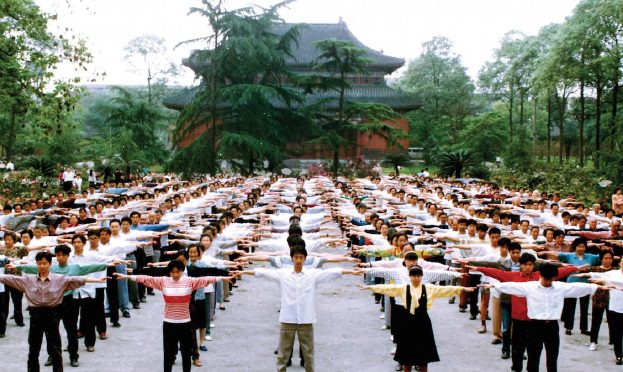
Falun Dafa was introduced publicly in 1992 and spread mainly through word of mouth. By the late 1990s, tens of millions of people were practising across China, a following whose scale even state institutions acknowledged at the time. Crucially, that community existed outside Communist Party structures: no Party committee supervised it, no official body licensed it, and its teachings placed moral authority in principles, Truthfulness, Compassion, Forbearance, rather than in the Party.
Jiang Zemin's decision
In July 1999, then-CCP leader Jiang Zemin launched a nationwide campaign to eliminate Falun Dafa. Contemporary human-rights documentation records mass detentions beginning within days. (Amnesty International, 1999) The campaign was not framed as ordinary law enforcement; it aimed at eradicating the practice and compelling practitioners to renounce their beliefs.
A specialised apparatus: the 610 Office
To run the campaign, the Party established a dedicated extra-legal coordination body, commonly known as the 610 Office, after its founding date of 10 June 1999. The U.S. Congressional-Executive Commission on China has described this apparatus and its role in directing the suppression of Falun Gong across ministries and provinces. (CECC annual report)
A government that regards a meditation practice as an ordinary public-order matter does not normally maintain a specialised, decades-long security apparatus for it. The existence of that apparatus is part of the evidence about how the Party itself understood the stakes.
Ideological control, not public order
The persecution that followed was not simply a ban on a meditation practice. It became an effort to force practitioners to renounce their beliefs, through detention, coercive “transformation” programmes and social pressure, and to reshape how the wider public understood Falun Dafa through a sustained propaganda campaign. Freedom House's research describes propaganda as an integral part of the enforcement mechanism. (Freedom House)
Seen this way, the question “why fear meditation?” inverts: a political system that seeks ideological authority over organised social life is threatened precisely by a large, popular, self-organising community whose loyalty it cannot command, however peaceful that community's activities are.
Explore further
The Question Behind the Crackdown: Why Does an Authoritarian State Fear Independent Belief?
How Did Meditation Become a National-Security Threat in China?
Why Is Beijing Still So Concerned About Falun Gong After 27 Years?