What is Falun Dafa?
Falun Dafa, also known as Falun Gong, is a spiritual practice introduced publicly in China in 1992 by Mr. Li Hongzhi. It involves meditation, five gentle exercises and teachings centred on the principles of Truthfulness, Compassion and Forbearance.
The practice spread largely through word of mouth. By the late 1990s, tens of millions of people across China were practising, in parks, workplaces and homes, with no membership structure and no fees. Outside China, Falun Dafa is practised freely in dozens of countries, including India.
Anyone interested in learning the practice itself can visit the official learning resources: FalunDafa.org or FalunDafaIndia.org.
July 1999: the campaign begins
In July 1999, then-CCP leader Jiang Zemin launched a nationwide campaign to eliminate Falun Dafa. Amnesty International was documenting the detention of practitioners within days of the ban and, by October 1999, reported concerns over torture and ill-treatment in detention. By March 2000 it had published a list covering nearly 2,300 reported cases of detention, arrest or sentencing since June 1999. (Amnesty International, 1999) (Amnesty, 2000)
Twenty-five years later, the U.S. State Department described the repression as an ongoing campaign and called on Beijing to release people imprisoned for their beliefs. (U.S. State Department)
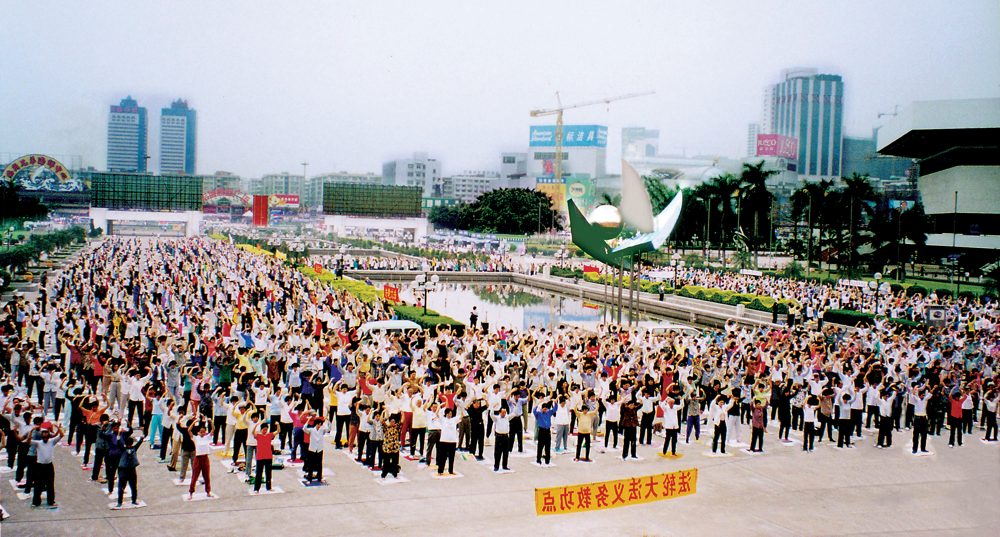
Detention and imprisonment
Practitioners have been detained, imprisoned and sentenced for refusing to renounce their beliefs or for distributing information about the persecution. Human-rights organisations and the U.S. Congressional-Executive Commission on China have documented administrative detention, labour-camp terms and criminal sentences applied to Falun Dafa practitioners over more than two decades. (Human Rights Watch) (CECC annual reports)
The State Department's country reporting on China continues to record imprisonment for Falun Gong-related religious activity. (U.S. State Department, religious-freedom report)
Torture and coercion
Human-rights reports and survivor testimonies have documented physical abuse, torture and coercive efforts, described officially as “transformation”, to force practitioners to abandon their faith. Amnesty International raised torture concerns within months of the ban, and subsequent documentation by human-rights organisations and congressional bodies has described coercive practices in detention over many years. (Amnesty International) (Human Rights Watch)
Where photographs of torture methods appear on this site in future, any reenactment will be clearly labelled as a reenactment based on practitioner accounts.
Propaganda and censorship
The crackdown was accompanied by a large-scale state propaganda campaign designed to demonise Falun Dafa, justify repression and isolate practitioners socially. Freedom House's research describes the propaganda effort as an integral part of the enforcement mechanism, shaping public perception inside China and, over time, influencing how the practice was described abroad. (Freedom House, The Battle for China's Spirit)
For how this matters to journalists reporting outside China, see Before Dismissing Falun Gong, Understand How the CCP Spent Decades Shaping Its Image and What Indian Journalists Should Check Before Quoting Beijing on Falun Gong.
Forced organ harvesting
Investigators, parliamentary bodies and independent tribunals have examined allegations that prisoners of conscience, particularly Falun Dafa practitioners, have been killed for their organs. The Chinese government denies that such abuses occur.
Beyond China's borders
Over time, practitioners and organisations outside China have reported surveillance, intimidation, diplomatic pressure, interference with events and other forms of transnational repression, documented from Iceland (2002) to U.S. federal prosecutions in the 2020s.